Sound familiar?Hamilton
- The call
- Halfway up, the door shudders. The sections seem to catch for a moment, the whole assembly shakes, then it carries on as if nothing happened. You have started holding your breath at that spot each time.
Halfway up, the door shudders. The sections seem to catch for a moment, the whole assembly shakes, then it carries on as if nothing happened.
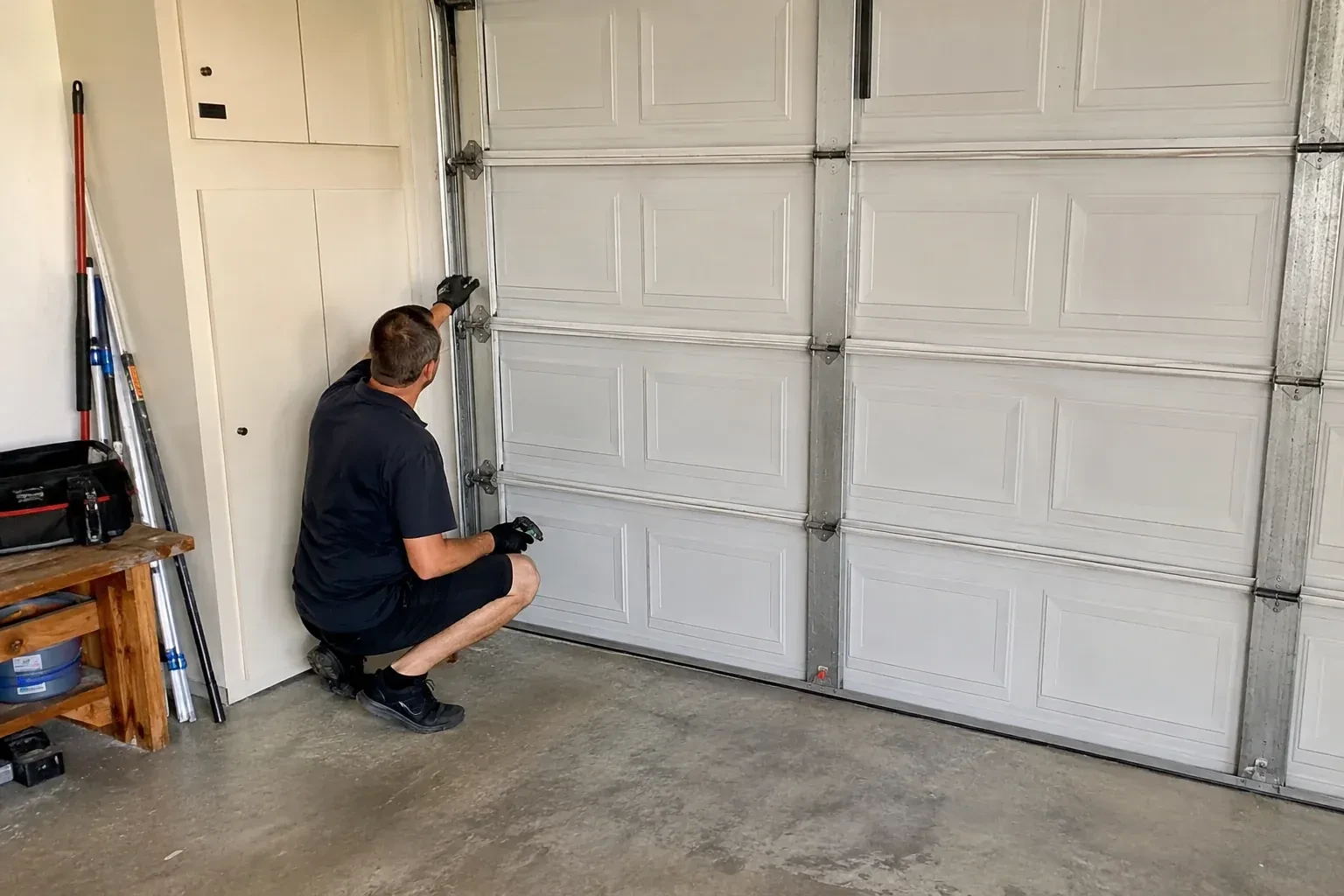
The visit follows a set order. First the technician watches a full cycle, up and down, from a safe distance, noting where the noise, shaking or hesitation lives. Then the door is closed and inspected hardware by hardware, from the bottom brackets to the torsion shaft. The manual release is pulled and the door is lifted by hand to feel the balance. Only then does the work start: fasteners, lubrication, opener adjustments and sensor alignment. A second cycle and the reversal tests close the visit, and the difference between the first run and the last is the measure of the tune-up.
Sound familiar?Hamilton
Garage Door Tune-Up · Hamilton
Scene 1
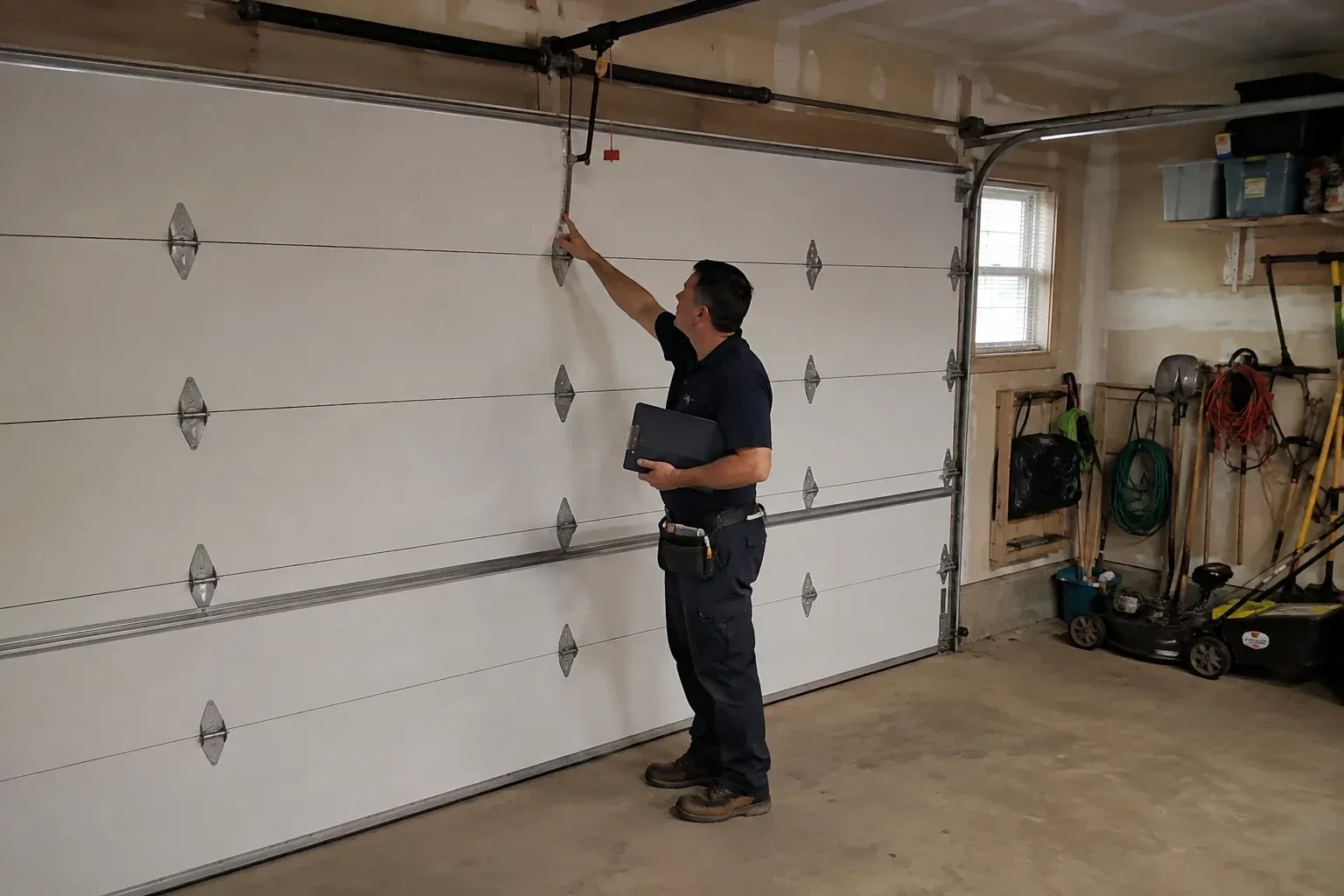
With the door closed and still, the inspection moves along the panels from the bottom up. Bottom brackets and cable attachments are looked at for rust, cracks and cable fraying but not touched, because they hold spring tension. Hinges are checked for cracked knuckles and elongated screw holes. Rollers are spun and wiggled to feel for flat spots, loose stems and worn bearings. Track brackets and lag bolts are tested for movement. At the top, the springs, drums, bearing plates and centre bracket are examined, and the opener's header bracket and the door arm's connection to the top section are confirmed solid. Every loose or worn item is noted before anything is tightened.
Scene 2
Rubber and vinyl get a silicone spray, never a petroleum product, which attacks the material. A bottom seal that is torn or has flattened can be replaced in the same visit if stock is on hand: the old length is drawn out of the retainer, the retainer is cleaned, and the new astragal is fed in and trimmed to width. Jamb and header weatherstrip that has gone hard or split is renewed so the door closes against a flexible edge and stops rattling in wind. Where the threshold holds water, the technician points out the low spot and suggests keeping it clear of ice, since a seal frozen to the slab is the usual winter casualty.
Scene 3
After a fall tune-up the door is set up for the season that tests it hardest. The lubricant on the moving parts stays fluid in the cold rather than thickening into a drag on the opener. The bottom seal and jamb weatherstrip have been treated so they stay flexible below freezing and release from the slab instead of tearing. If the seal ever freezes down on a bad morning, free the ice and dry the area before running the door rather than letting the opener force it; that habit protects the top section better than any force setting. You have been shown the threshold spot where water pools, and clearing snow and ice there becomes part of shovelling the driveway.
What shapes the quoteCootes Paradise Garage Door Pros
FeesSame any hour
No. Tracks should be clean and dry. Rollers are meant to roll along the track on their own bearings, and a film of lubricant on the track collects grit, thickens in the cold and makes the rollers slide and drag instead. Wipe the tracks with a rag and put the lubricant where it belongs: on the hinge pins, the roller bearings, the spring coils and the bearing plates at the ends of the torsion shaft.
Often, yes. A door that reverses before reaching the floor usually reacts to one of three things: photo-eyes misaligned or dirty, a down travel limit set so the door meets the floor before the opener expects it, or a force setting so low that stiff hinges, debris or a roller out of true read as an obstruction, since a clean, dry track is what the door is meant to run on. A tune-up clears all three by aligning the sensors, resetting the limits and freeing up the door's movement.
Two tests, once a month. With the door open, press close and wave a broom handle through the photo-eye beam near the floor: the door should stop and go back up. Next, set a 2x4 flat on the concrete in the middle of the opening and press close: the door must reverse when it meets the board. If it stops on the board without reversing, the down travel or force setting needs adjustment, and if it fails after that, book a visit.
HamiltonOntario
Garage Door Tune-Up · Ancaster Heights, Clearview Estates, Dancaster Courts, Greenside Acres, Harmony Hall II, Highland Park Survey, Maple Lane, Maple Lane Annex, Maywood, Mineral Springs, Mohawk Meadows, Nakoma, Oakhill, Parkview Heights, Perth Park, Pinecrest, Pleasant Valley, Spring Valley
Every square is one home in a hundred.
On-site assessment preferred · (289) 203-1011, open 24/7