Skip to content
CootesParadise Garage Door ProsOpen 24/7 (289) 203-1011
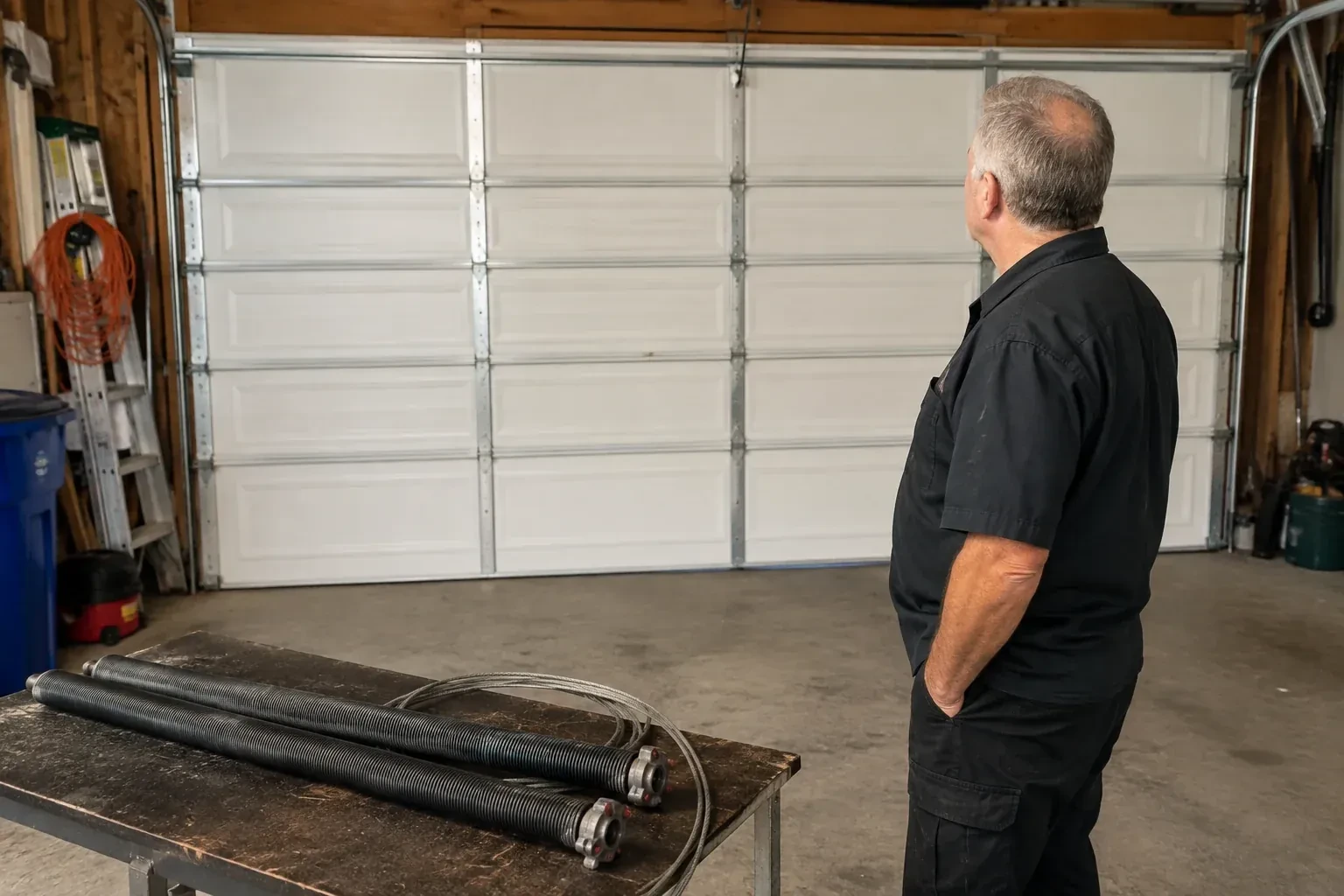
Detached coil springs with end fittings and a cable rest on a bench in front of a closed garage door. — Torsion Spring Replacement, Parkview Heights

Springs · Parkview Heights

Torsion Spring Replacement

Nothing broke outright, but the door has grown heavier each winter, opens more slowly and squeals as it moves. The springs on an older door have lost tension and the coils show pitting, so the system is asking for attention before it fails.

In plain words

The finished result is a door that behaves the way a good garage door should: it lifts by hand with light effort, stays where you leave it at mid-height, closes softly and lets the opener run with little strain. Reaching that point involves measuring the door, choosing a matched spring, winding it to the correct turns and testing the balance through the full travel. The technician then runs the opener's reversal test and lubricates the moving parts. You are left with a record of the spring installed, so future service starts from known specifications.

Sound familiar?Parkview Heights

The call
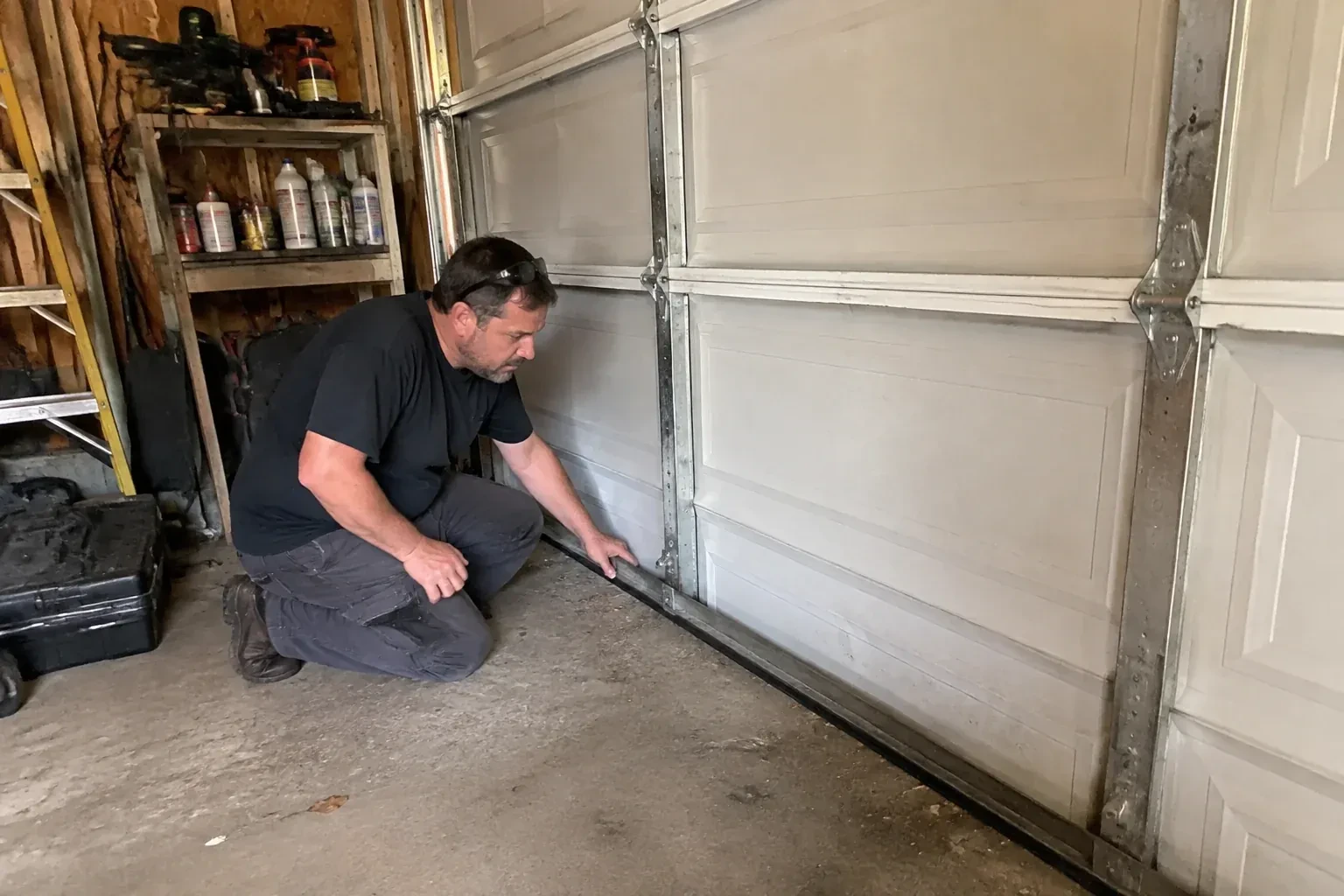
The door starts to rise, gets about the height of your knee, then shudders and reverses. The opener sounds strained, and the top section flexes as the trolley pulls on it, because the motor is doing work the spring used to do.
NextHow the visit goes

Torsion Spring Replacement · Parkview Heights

How the visit goes

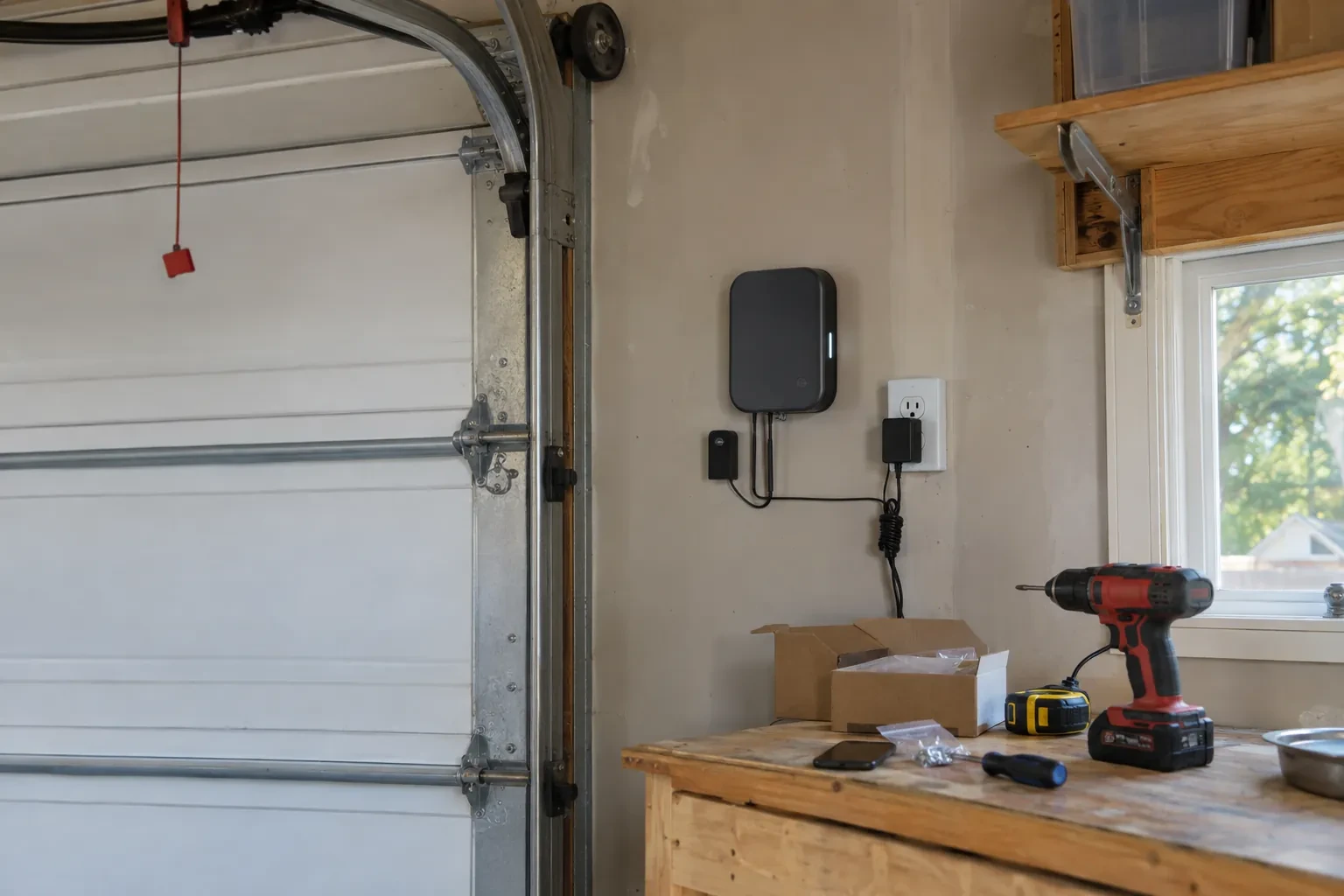
Dark wall-mounted box with a plug-in adapter and sensor beside a garage door, above a workbench with a drill and screws. — Parkview Heights
  1. Scene 1

    Following the hardware the spring drives

    The spring is one part of a chain, so the check follows that chain from the shaft outward. The centre bearing and the end bearings are turned by hand to feel for roughness or wobble. Cable drums are inspected for cracked flanges and worn grooves, and lift cables are examined along their length and at the bottom brackets, where fraying and rust usually start. Bottom brackets and their fasteners are looked at for corrosion, and the shaft is checked for straightness. Findings here decide whether the visit is a spring swap alone or a spring plus a few tired companions.

  2. Scene 2

    The replacement from start to finish

    With the door clamped and the opener disconnected, the technician releases any tension left in an intact spring, loosens the drum set screws and slides the drums inward, then removes the old spring from the shaft. Bearings are inspected while the shaft is free. The new spring goes on with its stationary cone bolted to the centre bracket and the winding cone facing the drum. Drums are refitted, cables seated, the shaft levelled and cable tension evened on both sides. Winding follows, then the set screws are seated and the clamps come off for a balance check. Each stage is done deliberately and in order.

  3. Scene 3

    Relief for the opener

    Your opener benefits as much as the door. With the spring carrying the weight again, the motor, gear drive, trolley and rail return to the light duty they were designed for, which tends to mean a longer working life and less noise. Force settings have been reset to suit a balanced door, so the safety reversal reacts to a genuine obstruction rather than to a heavy door. Once a year, repeat the simple reversal test by placing a length of wood flat on the floor in the door's path and confirming the door reverses on contact. The opener's photo-eye sensors deserve a wipe at the same time.

In the van

  • Winding bars
  • End bearing plates
  • Torsion springs, oil-tempered or galvanized
  • Stationary cone bolts and nuts
  • Torsion shaft and coupler

What shapes the quoteCootes Paradise Garage Door Pros

Access and working space
A vehicle that stays inside, shelving under the shaft, a very high ceiling or a tight side clearance affects how the technician sets up and how long the visit runs.
One spring or two
A single-spring door needs one spring; a paired system is usually replaced as a matched set of left- and right-wound springs. The number of springs and whether both are replaced is the largest single influence on the scope.
Drum type and lift configuration
Standard-lift drums are the common case. High-lift, vertical-lift or low-headroom arrangements use different drums, cable lengths and turn counts, which changes the parts and the time involved.

FeesSame any hour

Have it ready

Before you call · 0 / 3

(289) 203-1011

Things people wonder

Why do springs seem to break in cold weather?

Cold makes steel slightly less forgiving and thickens the grease on the coils, so a spring that has already used most of its cycle life is more likely to let go on a frosty morning when the door is first opened. The cold is the final straw rather than the cause; the underlying reason is fatigue from years of cycles, sometimes helped along by rust and dry coils.

What is the difference between torsion and extension springs?

Torsion springs mount on a shaft above the door and twist to store energy, lifting the door through cables and drums. Extension springs run alongside the horizontal tracks and stretch as the door closes, pulling it up through pulleys. Torsion systems tend to lift more evenly, take up less space beside the tracks and are the standard on most modern doors. Both are professional service items because of the energy they hold.

Why does the door need to be balanced, and how is that tested?

Balance means the spring is holding almost exactly the door's weight, so the door neither flies up nor slams down and the opener only guides it. It is tested by releasing the opener, lifting the door to about waist height and letting go: a balanced door stays there. The technician fine-tunes in quarter turns of the spring until the door holds at several heights and travels evenly on both sides.

Parkview Heightsinformation

HamiltonOntario

Town
Parkview Heights, Hamilton
In business
35 years
Hours
Open 24/7
Nights, weekends and holidays, same fees
Visits
On-site assessment preferred. Request a visit or call.

2021 census: what it means at the door

Every square is one home in a hundred.

  • 61 in 100 homes · older homes
  • About 61% of homes in Hamilton were built in 1980 or earlier, according to the 2021 Census.Original openers in older neighbourhoods often predate photo-eye sensors and rolling-code remotes. Bringing one up to date means a quieter motor, sensors that stop the door for a child or pet, and remotes that cannot be copied from the driveway, all installed in a single visit.
  • Single-detached houses make up about 56% of homes in Hamilton (2021 Census).Where housing types are mixed, some doors belong entirely to the homeowner and others are subject to a condo corporation's rules on colour and style. Before recommending a replacement door we ask who has a say, so the door chosen is one that can actually be installed.

Source: Statistics Canada, Census Profile

Open Parkview Heights in Google Maps

On-site assessment

Request a visit.

Nothing broke outright, but the door has grown heavier each winter, opens more slowly and squeals as it moves.

(289) 203-1011, open 24/7.