Sound familiar?Maple Lane
- The call
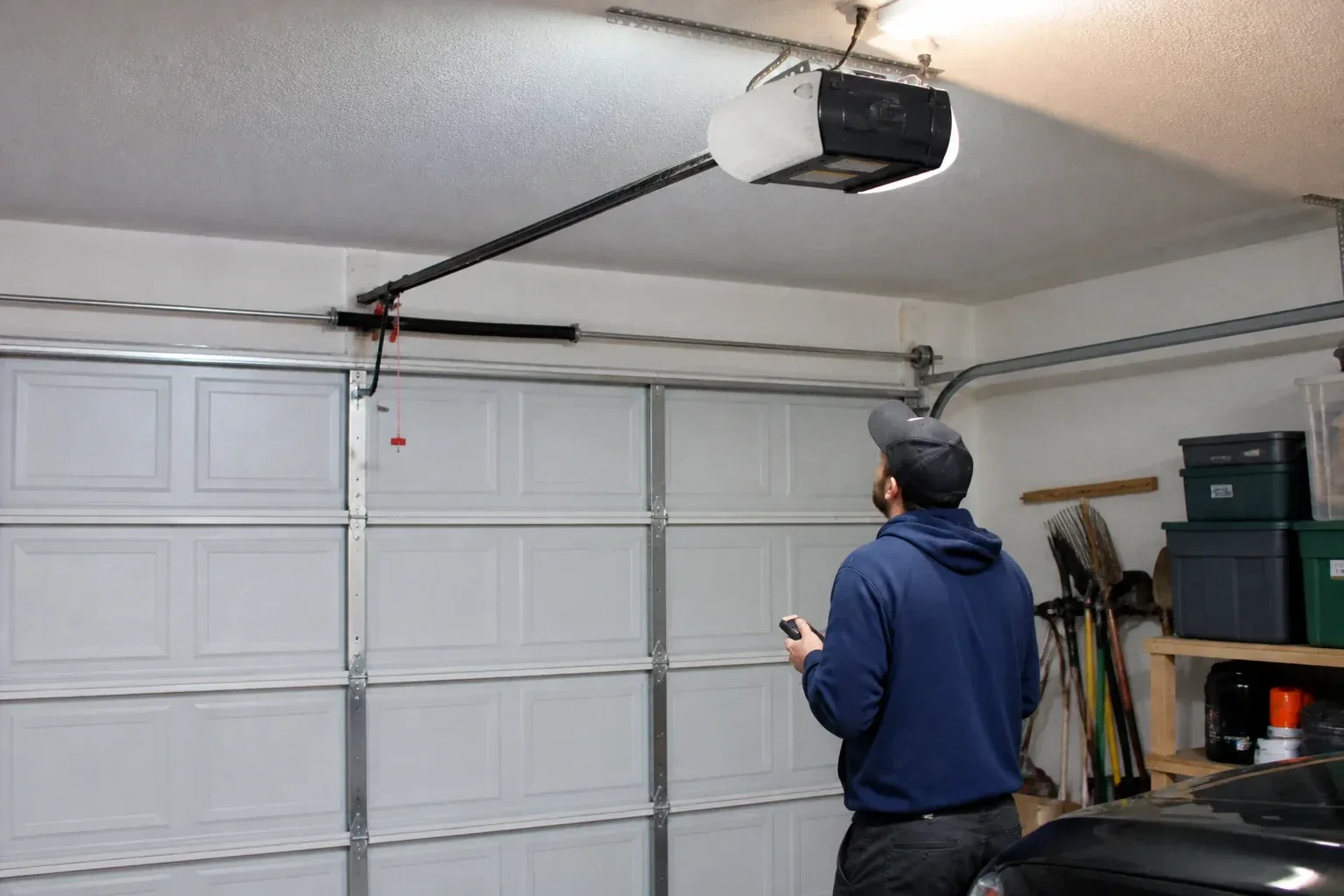
- The door closes, touches the floor, then climbs straight back up as if it hit something. Nothing is in the way, the sensor lights are steady, and it has been doing this since the weather turned.
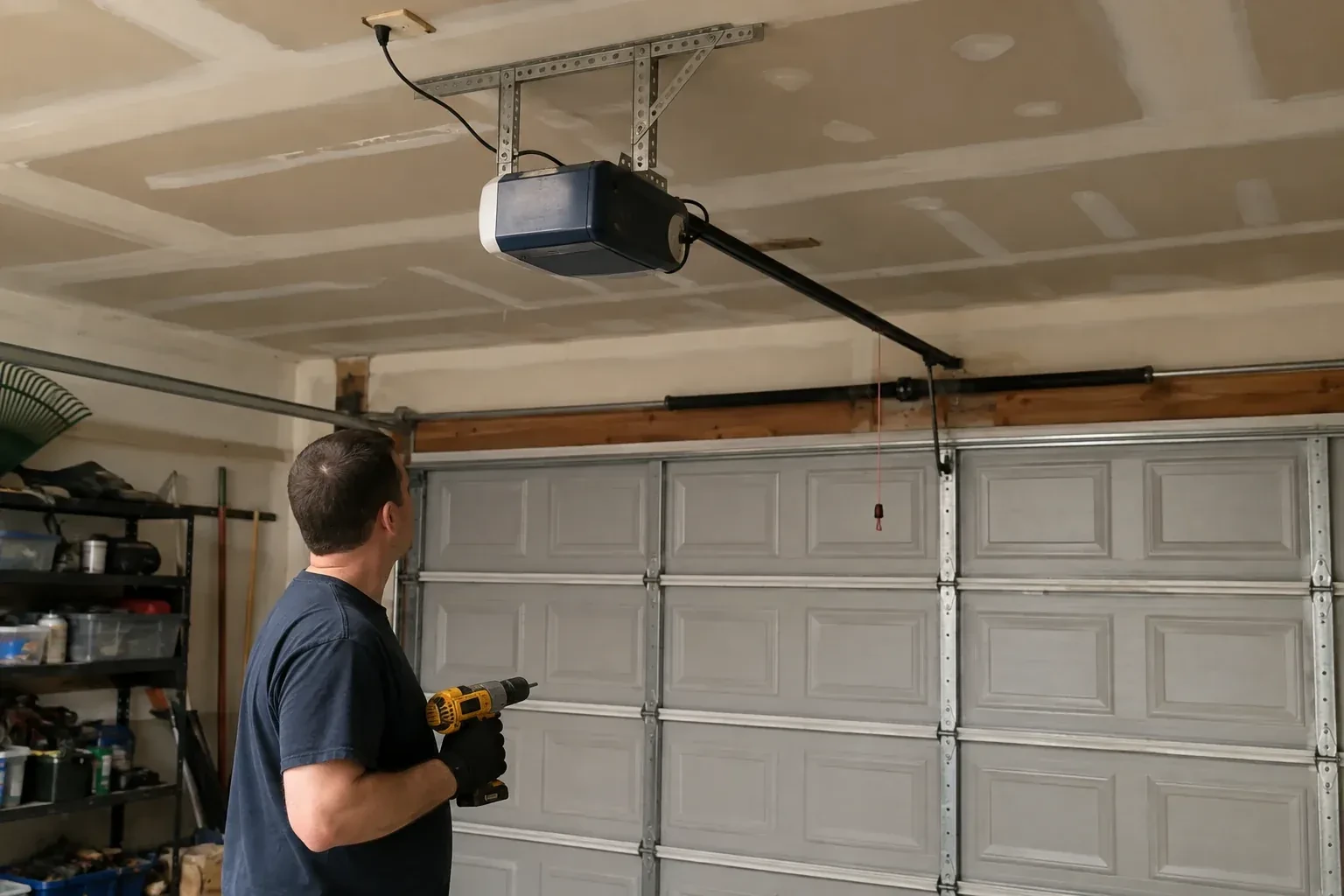
Halfway up, the door lurches. Something in the drive skips a beat, the chain jumps, and the door finishes its travel with a jolt.
A chain-drive opener moves your door with a steel chain that runs along a rail from a sprocket on the motor head to a trolley hooked to the door arm. The technician first confirms the door is balanced, since the chain only guides a door the springs already carry. Then the chain is checked for stretch and rust, the sprocket and the gear behind it for worn teeth, the trolley and its release for wear, and the rail and hangers for movement. Whatever has failed is replaced with parts made for that model, tension and limits are set, and the safety reversal is tested.
Sound familiar?Maple Lane
Chain-Drive Opener Repair · Maple Lane
Scene 1
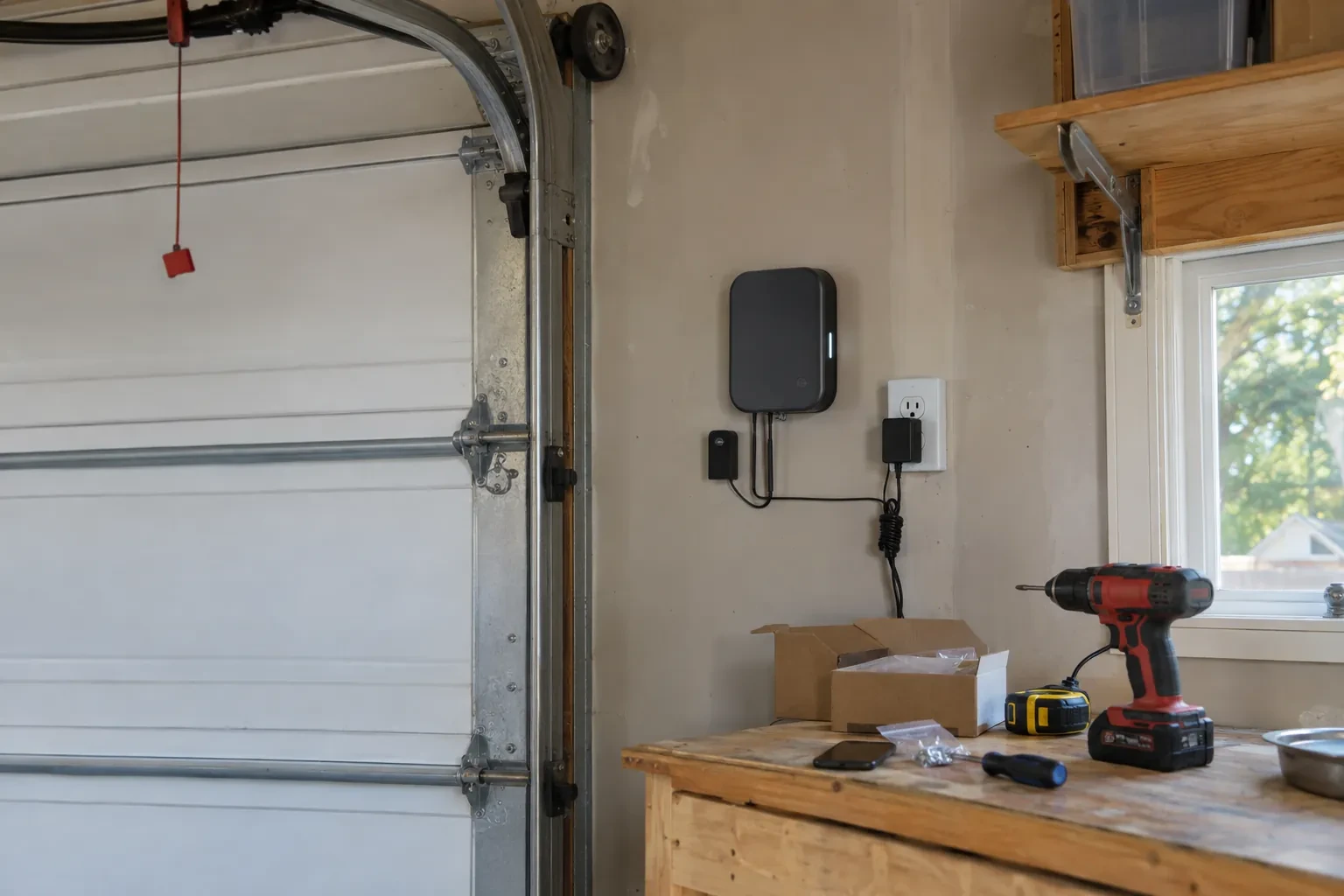
Every chain-drive repair starts with the operator unplugged and the red release pulled so the door is free of the trolley. The technician then lifts the door by hand. It should rise with modest effort, stay where it is left about a metre off the floor and settle gently at the top. A door that is heavy in the hands or drifts down is telling the technician that the springs, not the chain, are behind the strain, and that a stripped gear or a jumping chain was the symptom rather than the cause. Sorting the door out first is what gives a repaired drive a long life instead of a second failure.
Scene 2
With the door closed and disconnected, the two nuts on the tensioner shaft at the trolley are used in order. The outer nut, nearest the door, is loosened until the chain droops below the rail, the inner nut is backed off to make room, and then the outer nut is turned to raise the chain until it sits at the height the opener's own manual calls for on that rail shape, measured at the rail's midpoint. The inner nut is tightened against it to lock the setting. Once the door is reconnected and closed some droop appears in the chain; that is normal provided the measurement returns with the door open.
Scene 3
A new or freshly tensioned chain settles over its first weeks of use, so a small change in sag is expected and was allowed for. Over years, though, a chain lengthens a little at a time. Glance at it now and then with the door open: if it has dropped visibly below where it sat after the repair, or has started to tap the rail, it is due for tensioning. Do the same after any winter when the garage has been especially cold. Surface rust on a chain in an unheated garage is worth mentioning at the next service before it stiffens the links.
What shapes the quoteCootes Paradise Garage Door Pros
FeesSame any hour
Four things are checked in order. The door may be disconnected at the red handle, or the manual lock may be engaged. The trolley may be jammed against the stop bolt at the end of the rail. Or the drive gear inside the head has stripped, so the motor turns without turning the sprocket; pale shavings under the cover confirm it. A broken spring also leaves a motor humming against a door far too heavy to lift, and that is spring work first.
Those are shavings from the plastic drive gear inside the head. The gear meshes with a steel worm on the motor shaft, and when it wears the teeth flake off and collect under the cover. Once you see shavings the gear is close to stripping, after which the motor runs and the door stays still. Replacing the gear and sprocket assembly before that happens turns a stranded morning into a planned repair.
Yes, if you need the door open and the door is closed or nearly so. Pulling the handle frees the door from the trolley so it can be lifted by hand. Do not pull it while the door is open, because a door with a weak spring can drop. If the door will not lift by hand, or feels very heavy, leave it and mention that when you call, since it points to a spring rather than the drive.
HamiltonOntario
Chain-Drive Opener Repair · Hamilton, Ancaster Heights, Clearview Estates, Dancaster Courts, Greenside Acres, Harmony Hall II, Highland Park Survey, Maple Lane Annex, Maywood, Mineral Springs, Mohawk Meadows, Nakoma, Oakhill, Parkview Heights, Perth Park, Pinecrest, Pleasant Valley, Spring Valley
Every square is one home in a hundred.
On-site assessment preferred · (289) 203-1011, open 24/7